The Challenge
Egypt was facing long summer periods where electricity cuts became part of daily life.
People were already using candles, flashlights, lanterns, and other temporary solutions. The opportunity was to turn a normal Coca-Cola purchase into something useful, emotional, and memorable.
The challenge was simple:
How can Coca-Cola create value during a real consumer problem without using a discount or a normal promotion?
The Insight
Coca-Cola is already connected with refreshment, heat, social moments, and happiness.
During a power cut, people do not only need a drink. They need comfort, light, and a small sense of control.
The idea was built around one insight:
A bottle already sits in the home. What if it could also help the home?
The Idea
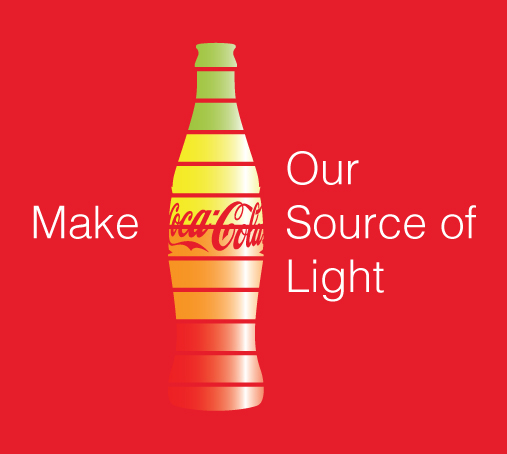
Create a Coca-Cola bottle or sleeve that absorbs light when placed near a lamp and glows when the power goes out.
The product becomes a simple emergency light source.
The mechanic is easy:
- Buy a Coca-Cola 6-pack
- Place the bottles near a lamp or light source
- Use the bottles as temporary light during power cuts
This turns the 6-pack from a normal beverage purchase into a functional household item.
The Strategic Role
This was developed as a self-initiated creative concept, from ideation to validation and prototype.
My role covered:
- Identifying the cultural and consumer problem
- Building the product activation idea
- Connecting the idea to Coca-Cola’s brand platform
- Creating the sales mechanic around the 6-pack
- Structuring the pitch narrative
- Developing the prototype video flow
- Validating the idea against consumer need, brand fit, and business logic
Validation
The concept was validated across four areas.
1. Problem relevance
The idea responds to a real daily frustration: power cuts during hot summer periods.
It does not ask the consumer to change behavior. It builds on something they already do: buying drinks for the home.
2. Brand fit
Coca-Cola’s platform is built around happiness, sharing, refreshment, and emotional moments.
The glowing bottle gives the brand a practical role inside the home while keeping the emotional brand promise alive.
3. Sales logic
The 6-pack mechanic gives the campaign a direct commercial angle.
Instead of promoting one bottle, the idea encourages multi-pack purchase because every bottle becomes a small light source.
4. Prototype feasibility
The idea was converted into a 73-second animated prototype showing the full journey:
- Egypt at night
- The electricity-cut problem
- The usual alternatives
- The Coca-Cola solution
- The usage steps
- The 6-pack purchase mechanic
- The final brand moment
The Prototype
The prototype uses a simple red-and-black visual language aligned with Coca-Cola’s identity.
The story starts with the context, then moves into the problem, then introduces the solution in a clear product-demo format.
The ending brings the concept back to the brand idea:
Open Happiness.
The Outcome
The result is a complete spec campaign prototype that can be used for stakeholder pitching, creative portfolio presentation, and further product testing.
The next stage would be to validate:
- Glow material performance
- Bottle or sleeve production cost
- Safety and packaging requirements
- Retail display concept
- Consumer response through a small market test
Why This Project Matters
This project shows how a brand can move beyond advertising and become useful in a real-life moment.
The idea is not only about visibility.
It is about turning the product into a helpful object, creating a reason to buy, and connecting the brand to a human need.